Healthy Learners

Communicable Disease Resource
for Educators, Parents, and Caregivers
This resource links to New Brunswick guidelines and fact sheets on preventing and controlling communicable diseases and infestations for school administrators, teachers, and parents. It does not replace medical consultation or Public Health reporting, which may still be required. The protocols followed by ASD-N are defined by Policy 714 – Preventing and Managing Illnesses and Notifiable Diseases in Schools.
New Brunswick Public Health and Education Acts
Responsibilities for reporting communicable diseases:
Excluding Students from School for Disease Control
- Responsibility of School Principal
Students may need to stay home to prevent spread. Refer to the general School Exclusion Guidelines and consult Public Health as needed. The Regional Medical Officer of Health may recommend additional measures such as increased cleaning or limiting gatherings. - Authority of the Medical Officer of Health
In situations with sufficient risk, such as an outbreak, the Regional Medical Officer of Health may take necessary measures under the Public Health Act, including excluding certain pupils from school.
Provincial Communicable Disease and Infestation Information
If a child has an undiagnosed rash or skin condition, they should be evaluated by a health care provider before returning to school.
Methods to Help Decrease the Spread of Germs
Hands spread an estimated 80% of common infections like colds, COVID-19, RSV, and influenza. Use good handwashing technique. Hand sanitizer is helpful when hands are not visibly dirty or when soap and water are not available.
Routine Precautions (Universal Precautions)
Assume blood and body fluids can carry illness. Use gloves, careful cleaning, and proper handwashing when cleaning spills or contact with bodily fluids.
Childhood and School Immunization Program in New Brunswick
Influenza-Like Illness (ILI) Reporting
During respiratory season, schools report ILI to Public Health for early detection of potential outbreaks. Timely reporting supports prompt control measures.
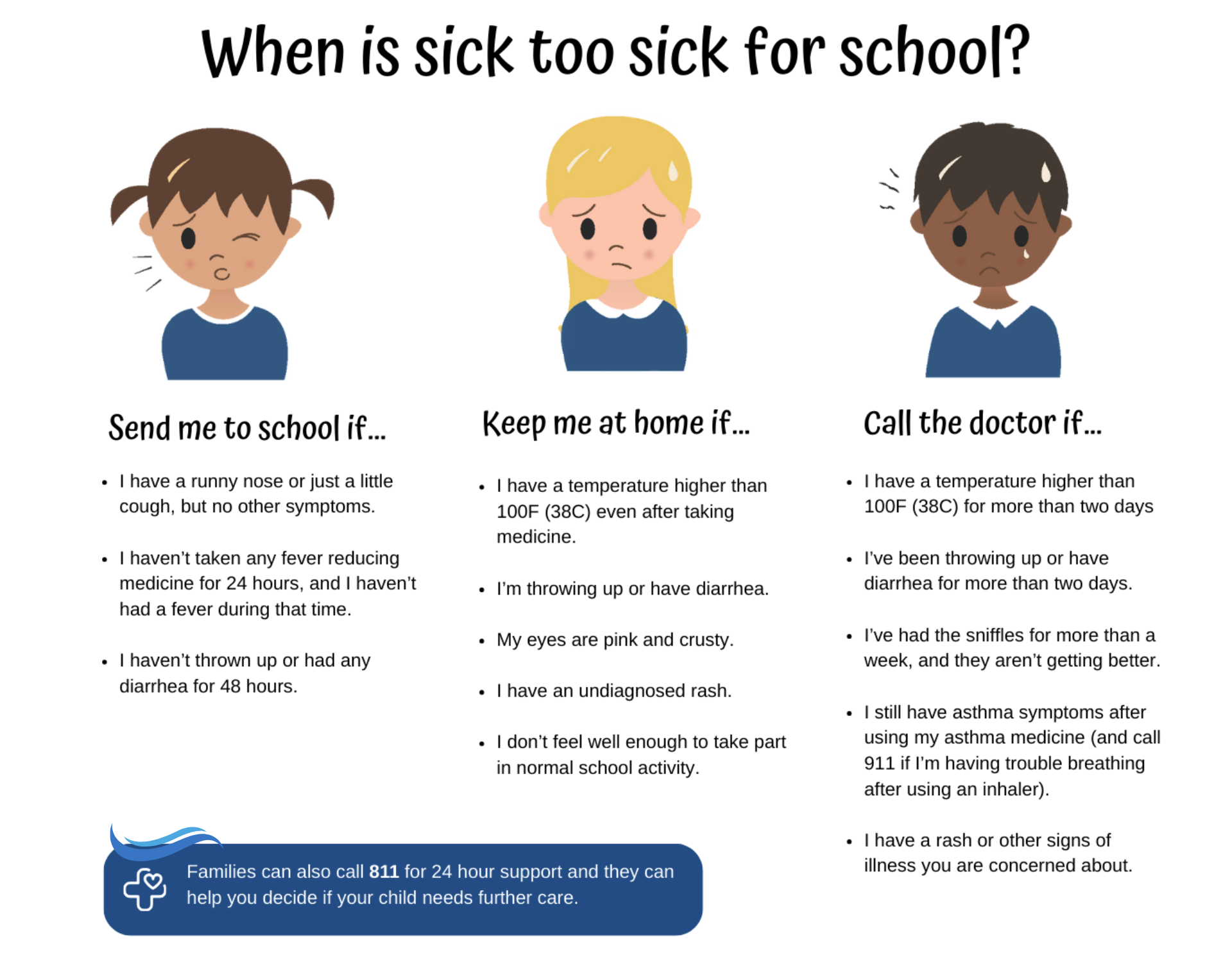
When to Keep a Child Home from School
A sick child may struggle to learn and could spread infection. Keep children home if:
- Fever: 38 °C (100.4 °F) or higher. Return when fever has been gone for 24 hours without fever-reducing medicine.
- Diarrhea: Frequent loose or watery stools. Return 48 hours after the last episode.
- Refer to the School Exclusion Guidelines for additional situations.
Teach and reinforce handwashing and cough or sneeze into a tissue or elbow. Help children stay well with routine immunizations, flu shots, a balanced diet, outdoor activity, and good sleep.